Showing posts with label tibet. Show all posts

A Song for Tibet - 1991

Filmed in the Indian Himalayas and in Canada, A Song for Tibet tells the dramatic story of the efforts by Tibetans in exile, including the Dalai Lama, to save their homeland and preserve their heritage against overwhelming odds. Since the invasion of their territory by China in the late 1950s, Tibetans have been struggling for cultural and political survival.

Watch Online:

Torture in Tibet / China’s Brutality in Tibet Exposed

Torture in Tibet / China’s Brutality in Tibet Exposed

Horrific new video from Central Tibetan Administration showing terrible injuries and damge from torture by Chinese in Tibet. Also Video footage of Chinese attacking helpless monks and civilians in Tibet. Tibet remains under Martial Law 1,000's have been murdered and disapeared over the last year. 1.5 million Tibetans have died at the hands of the Chinese in Tibet.

Watch Online:

Tibetan Exiles Grow Impatient - India (1998)

Monks describe how they were imprisoned, interrogated and tortured inside Tibet. They claim the Chinese persecution in Tibet is getting worse. Only in the refuge of Dharamsala can Tibetan culture truly flourish. We meet young Tibetan exiles who are training up for a physical assault against the Chinese. They say the Dalai Lama's 'Middle Way' of peaceful negotiation is getting no response from the Chinese. They fear that time is running out for Tibetan culture. And now with the arrival of the Karmapa Lama in India, their anxieties can only grow over a possible Chinese security crackdown in Tibet. Also available: Key footage revealing violence of Chinese occupation: Tibetan Monks are beaten by Chinese Police.

Watch Online:

CCTV-9 Propaganda Documentaries (2008/2009)

Following the 2008 Tibet Unrest, China's official international broadcaster, CCTV-9, began airing a series of documentaries about Tibet. The spin was that China's role in Tibet has been positive and that it has resulted in economic development and the abolition of the traditional system of serfdom.

No matter which side of the line you stand on the Tibet issue, these documentaries offer an insight into the official Chinese line and the art of producing propaganda documentaries.

Time of Reform - 50 Years of Democratic Reform of Tibet

Part 1:


Part 2:


More Videos:

Further Reading:

Al Jazeera - 101 East - Tibet Refugees (2008)

Every year, 3000 Tibetan refugees risk death from the weather and border guards as they flee China across snow covered passes in the Himalayas to Nepal.

Watch Online:

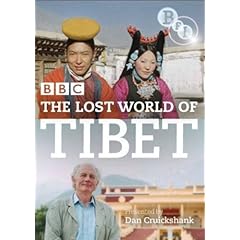
BBC - The Lost World of Tibet (2008)

This film is being brought to television as a result of a BBC/British Film Institute co-production. A recently restored treasure-trove of colour films from the 1940s and 1950s provides the core of this astonishing film, which allows us to see what Tibet was like before its brutal occupation by China. As members of the aristocracy and the Tibetan government in exile recall, the Tibetans world revolved around a series of colourful religious festivals, taking up 68 days of the year. In The Great Prayer Festival, monks take over from the government for a few days and, whilst ceremoniously whipping their subjects, impose fines for such offences as singing in public or having a dirty house. The film includes a revealing interview with the Dalai Lama, who reminisces about how much he missed his mother and his envy for his brother who got to play with all his toys.

CCTV-9 - The Past of Tibet (2008)

Official Website

According to Old Tibetan law, Tibetans were divided into 3 categories, each was further divided into 3 classes. The Pala Villa owners´ wealth was beyond imagination. His house had about 1,000 rooms, in which there were 50 servants. His family also had 6 other estates in Tibet, and over 50 people to manage the estate. Gesang Quzhen and her mother slept in a room without roof. They were always hungry, but dared not ask for food. Deqing Zhuoma´s family were serves for 4 generations. She was born in a cowshed, and she was the 4th generation serf. Before 1959, there was a practice in Tibet, that is lama service - If a family had two sons, one of them had to be a lama. The basement of the building was a prison, where many cruel and savage ways of punishments were practiced. At meal time, the prisoners were sent to the streets to beg for food. Those who could not get food, would have to go hungry. The streets were full of beggars. Democratic reform was carried out in Tibet, it put an end to the system of feudal serfdom. It turned 1 million tibetan serfs into free men.

Watch Online:

Also visit the CCTV International Youtube channel for more.

CCTV-9 - Documentary on the Dalai Lama (2008)

Official Website

Tenzin Gyatso, the 14th Dalai Lama, was born in Daktse Village in Qinghai. He was the son of Tibetan peasants. In every aspect, the Dalai Lama enjoyed the most expensive attention a supreme personality could enjoy in mediaeval Europe. The West has long been interested in Tibet. After living Buddha Radeng´s death, Tenzin Gyatso was deeply influenced by the thoughts of "independence". The indication from the Angel was the 16-year-old Dalai Lama Tenzin Gyatso should lead. Dalai Lama began his political career then. In Zhongnanhai, the Dalai Lama met Chairman Mao for the first time. In 1956, General Chen Yi arrived in Lhasa, leading a delegation from the central government. The US started deeping their hands directly into Tibetan affairs. In 1959, the Dalai Lama and his followers openly announced "Tibetan independence".

Watch Online:

Channel 4 - Dispatches: Undercover in Tibet (2008)

Official Website

A timely report on life in Tibet under Chinese occupation as Tash Despa returns to his homeland after eleven years in exile, accompanied by award-winning director Jezza Neumann. For three months the pair risked imprisonment and deportation as they tried to uncover the true extent of the so-called 'cultural genocide' described by the Dalai Lama. Their film reveals that the nomadic existence of native Tibetans is being eradicated and that freedom of expression is increasingly tightly policed.

Download:

BBC - A Year in Tibet (2008)

Unaccompanied by Chinese authorities for the first time, BBC cameras offer an insight into the daily lives of Tibetans and reveal the significance of Buddhism within society.

Download:

Dan Rather Reports - One Man vs. China

Dan Rather visits with the Dalai Lama. The man who calls himself "just a simple monk" tells us the Chinese, who exiled him decades ago, lack the moral authority to become a super power.


Trouble in Exile (2006)

Younger Tibetans are becoming increasingly frustrated by the Dalai Lama's message of peaceful resistance. They believe it brings them no closer to freeing their homeland.

"I'm calling upon Tibetans to go inside China and sabotage their economic structure," proclaims campaigner Lhasang Tsering. "If we don't struggle for independence, the Chinese won't give us our freedom." Like many, she's angered by the Dalai Lama's policy of pursuing autonomy not independence. Taking inspiration from the Khampa Warriors, Tibetan fighters who battled the Chinese, younger campaigners are switching to more militant tactics. As one states: "After the US occupied Iraq, the people rose up. Do we have to do this? That's what we have to think about."


Watch on Youtube:

Tibet: Cry of the Snow Lion

Official Website

Ten years in the making, this award-winning feature-length documentary was filmed during nine journeys throughout Tibet, India and Nepal. Cry of the Snow Lion brings audiences to the long-forbidden "rooftop of the world" with an unprecedented richness of imagery... from rarely-seen rituals in remote monasteries, to horse races with Khamba warriors; from brothels and slums in the holy city of Lhasa, to magnificent Himalayan peaks still traveled by nomadic yak caravans. The dark secrets of Tibet's recent past are powerfully chronicled through personal stories and interviews, and a collection of undercover and archival images never before assembled in one film. A definitive exploration of a legendary subject, Cry of the Snow Lion is an epic story of courage and compassion.

CBC - The Blue Buddha: Lost Secrets of Tibetan Medicine

Official Website

Twelve hundred years ago the people of Tibet developed a comprehensive medical system. They understood how the mind affects the body. They knew subtle ways of changing the body's chemistry with medicines made from plants and minerals. They blessed their medicines in lengthy rituals. And they encoded this knowledge in a series of elaborate paintings called thangkas.

Blue Buddha: Lost Secrets of Tibetan Medicine traces the odyssey of traditional Tibetan medicine from it's roots in ancient Tibet, to a worldwide interest in it's traditional medical wisdom. We meet several leading physicians in India, as the program introduces us to the basic concepts of this ancient system of healing. We also trace the fate of the 77 thangkas that comprise the Atlas of Tibetan Medicine, the great mnemonic device that encodes the entire system of healing. From the snows of Siberia and the Himalayas to the vital culture of Tibet in exile, in Dharamsala, India, this is a stunning high-definition look at where Tibetan medicine has come from.

Download:

The Yogis of Tibet (2003)

This documentary film follows the lives and practices of Yogis in Tibet, people who have spent their lives in rigorous and secret training in order to gain the ability to exert control over their bodies and minds. Living exceptionally isolated lives, Yogis have been relatively unstudied by outsiders in the past.